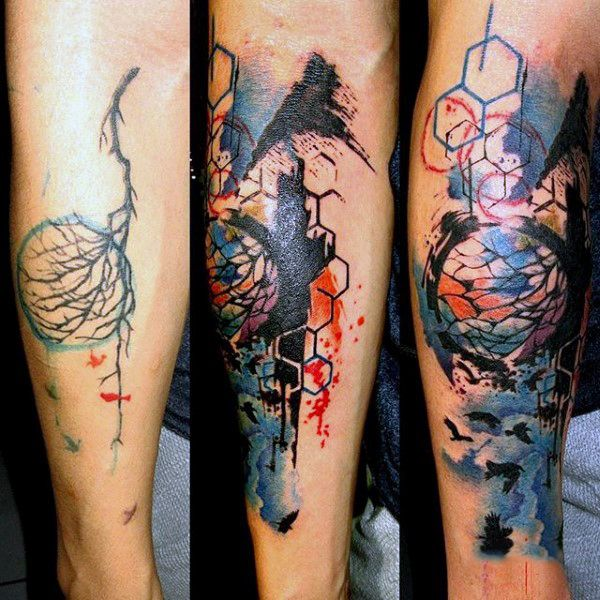
Like the fine art that has inspired its stylistic creation, Watercolor tattoos are usually beautiful, organic, graceful plays of color that use the skin as a canvas. Rather newly founded, the Ink Fanatic Tattoos trend has since seen a lift due to artists that continue to push the aesthetic, methods and concepts to new heights of ingenuity. In this guide, we research the origins and techniques found within the Watercolor style.
The Origins of Watercolor Tattoos
The actual type of painting Watercolor tattoos stem from is practically primitive. In ancient times all pigments for painting were made from organic materials including earth substances like plants, minerals, animals, charred bones and the like.
The first examples of watercolor painting may actually be traced to paleolithic cave paintings, however the first refined use of the medium is often thought to be the Egyptian papyrus scrolls. Later used for the Illuminated Manuscripts in the Middle Ages, watercolor painting did not see consistent and widespread use until the Renaissance.
It is no surprise that due to the natural compounds of watercolor pigments it would lend itself well to natural illustrations. The paints were relatively easy to use, very versatile, and traveled well. Although this may all seem completely disconnected to the contemporary Watercolor tattooing style, the techniques and stylistic approaches are very similar to many of the artists working in that particular era.
Artists such as Thomas Gainsborough, JMW Turner, John James Audubon, Thomas Eakins, John Singer Sargent, and Eugène Delacroix are only a few painters who used watercolor and propelled it to the reputation of a serious arts material. Many of the skills these fine artists used are actually employed by Watercolor tattooists as well, as the medium and techniques rather easily translates to application on skin.
Tattoo flash is also often painted with watercolor, as well as gouache, a more opaque form of the aforementioned paint. The Watercolor tattoos we see today are created with a vibrant and expansive palette of colors, but this wasn’t always so. Restrictions to the primary colors of red, blue, yellow, and green were often all old-school tattooers had to work with at the time flash and modern tattooing was getting its foothold. These pigments not only aged best on paper but on skin as well.
During the late 19th and early 20th century, tattoo flash was making its rounds globally through peddlers, sailors, and artists alike. There was a huge demand for new and inventive designs, as well as a source for tattooists to share their portfolio. Watercolor flash was the quickest and easiest way to do it, and many of the flash sheets from those eras still exist and inspire the Watercolor tattoos we see today.
 Site Title
Leave a comment